Top 10 Linode Alternatives for Cloud Computing in 2026

Manager, Content Marketing
- Updated:
- 21 min read
The decision to operate in the cloud is more than a mere technical choice; it’s a strategic move that can shape your business’s trajectory. Choosing the right cloud provider can unlock new efficiencies, scalability, and innovation. As for the wrong choice? Could result in increased costs, operational complexities, and a slower time to market.
Akamai Cloud (previously known as Linode), a prominent player in the cloud hosting arena, offers compute, storage, and networking solutions. While Linode’s offerings are adequate for certain needs, Linode may not be the right fit for everyone—your budget, growth plans, and technical needs might point you toward a different provider.
Read on to understand what to look for in a cloud provider and how the top Linode alternatives compare. We’ll explore both hyperscalers—major cloud providers (like Amazon Web Services (AWS), Microsoft Azure, and Google Cloud Platform (GCP)) with extensive infrastructure for supporting large-scale cloud computing—and specialized providers, like DigitalOcean, that offer more tailored and cost-effective solutions.
Key takeaways:
-
Linode is a solid choice for cloud computing, but it’s not your only one—and the provider you pick can affect how easily you can scale, how smoothly your operations run, and what you end up spending.
-
Exploring your options can surface providers with broader product offerings, more responsive support, straightforward pricing, and capabilities that actually match your growth plans.
-
Key factors to consider when evaluating a cloud provider include cost-effectiveness, the range of services like managed databases and PaaS, quality of customer support and documentation, user experience, and the global distribution of data centers.
-
Alternatives to Linode include specialized providers like DigitalOcean, Vultr, Scaleway, OVHcloud, and Hetzner, as well as hyperscalers like AWS, Google Cloud Platform, Microsoft Azure, IBM Cloud, and Alibaba Cloud.
What is Linode?
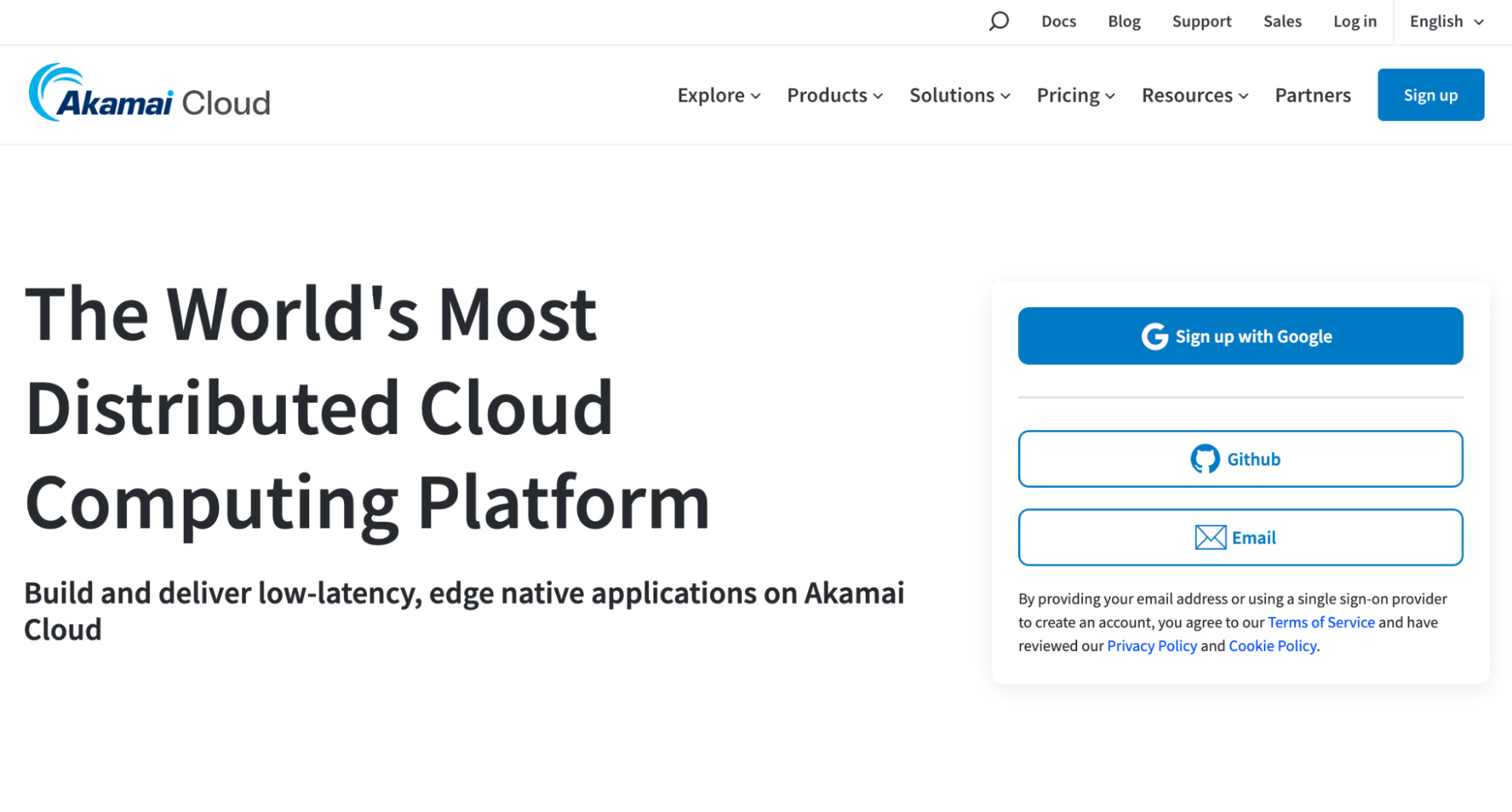
Previously known as Linode, Akamai Cloud has carved a niche for itself in the competitive cloud services market. Known for its developer-friendly approach, Linode caters to a range of hosting needs from small personal projects to large-scale enterprise solutions. Since its acquisition in 2022, Linode offers compute, storage, networking, and managed databases, with access to a global edge network spanning 130+ countries. For AI and ML workloads, Linode offers on-demand NVIDIA GPUs—RTX 4000 Ada for inference and media encoding, Quadro RTX 6000 for deep learning—with hourly pricing and low egress fees.
Linode key features:
-
Deploy and manage containerized applications using the Linode Kubernetes Engine (LKE) for orchestrating workloads.
-
Run compute instances on a platform that is now connected to Akamai’s distributed global edge and security network.
-
Automate daily, weekly, and bi-weekly backups of any compute instance with a simple, fully-managed add-on service.
-
Managed databases for MySQL and PostgreSQL, plus object storage for high-availability data.
-
Akamai App Platform for deploying cloud-native applications on Kubernetes without managing infrastructure.
-
Marketplace with one-click deployment for popular apps and developer tools.
Linode pricing:
-
Compute: $5/month starting for Nanode 1 GB Shared CPU with 1 GB RAM, 1 CPU, 25 GB storage, and 1 TB transfer
-
Akamai App Platform: $0 (free); runs on LKE infrastructure with consumption-based pricing for underlying compute resources
-
GPU Instances: $0.52/hour ($350/month) for RTX 4000 Ada; $1.50/hour ($1,000/month) for Quadro RTX 6000
Factors to consider when selecting a cloud services provider
To choose a cloud services provider, weigh your options on various dimensions— while some providers may excel in certain areas, they might not hit the mark in others. For example, a hyperscaler might offer the broadest service catalog but come with complex, unpredictable pricing. Or a provider with strong GPU availability might have limited geographic coverage for your other workloads.
Learn how Traject Data leveraged DigitalOcean’s tailored infrastructure—flexible VM configurations, affordable egress pricing, and strategic technical support—to optimise cost and performance for 2 billion monthly requests.
The key is finding the puzzle piece that fits perfectly into the unique shape of your business needs. Here are ten factors to consider:
-
Cost effectiveness: It’s not just about upfront, competitive pricing—but also a transparent billing structure that scales sensibly. Look for providers who offer a variety of pricing models (i.e. pay-as-you-go or reserved instances) tailored to match your specific usage patterns and cost management tools to help you maximize your investment.
-
Range of products and services: A broad spectrum of services, from basic hosting to advanced AI and big data solutions, are vital for businesses looking to scale or diversify their operations without the headache of switching providers. Look for the availability of cutting-edge technologies and integration options with the tools and services you already use.
-
Target user base: Hyperscalers that offer depth within their products (and as a range of total offerings) can be useful for large enterprises, but complex in usage and pricing for smaller teams. Testimonials or case studies from businesses similar in size to yours can offer useful insights.
-
Quality support and resources: Quality support can be gauged through the provider’s availability of round-the-clock customer service, the responsiveness and technical expertise of their support team, and the variety and convenience of channels available for assistance. Additionally, check for a comprehensive repository of resources—detailed documentation, tutorials, user forums, and training materials.
-
User experience: An intuitive, well-designed user interface simplifies navigation and tasks, making it easier for users of all skill levels to operate effectively. Look for a clean, easy-to-navigate dashboard and streamlined processes for setting up and managing services.
-
Scalability: This dictates how well the provider can accommodate your business’s growth and fluctuating demands. Look for providers offering flexible scaling options, such as automatic scaling or easy-to-adjust resource limits.
-
Integrations: Look for a provider that integrates with your existing tools—whether that’s your CRM, project management platform, or data analytics stack—and offers APIs, SDKs, and third-party support to make those connections easy. If you’re building with AI, check whether the provider offers one-click deployment for popular models.
-
Global infrastructure: Look at the number and distribution of data centers, the presence in key international markets, and features like geo-redundancy. Beyond the number of data centers, look for features designed to reduce latency, like a Content Delivery Network (CDN).
-
Security: Assess a cloud provider’s adherence to industry standards and certifications, such as ISO 27001 or SOC 2. The implementation of advanced security measures like end-to-end encryption, regular security audits, a built-in firewall, and multi-factor authentication are also indicators of a provider’s dedication to protecting client data.
-
Reputation: Speak with fellow entrepreneurs, founders, and CTOs within your network for insights into a provider’s performance and reliability. Examine the provider’s history in handling outages, updates, and customer support issues.
-
Uptime: When selecting a provider, look for a clear service level agreement (SLA) that contractually guarantees a high level of service availability. For example, DigitalOcean offers a 99% uptime SLA for GPU Droplets, ensuring network, power, and server availability.
Top 10 best Linode alternatives
In exploring Linode alternatives, you won’t be surprised to see familiar names like AWS and GCP (also known as hyperscalers) as part of the discussion. However, we’ve also included specialized providers in the cloud market that offer unique features that might better align with your specific business needs.
| Provider | Best for | Key features | Pricing |
|---|---|---|---|
| Linode (Akamai) | Users prioritizing stable, regional compute nodes over a wide service catalog | LKE managed Kubernetes, managed MySQL/PostgreSQL databases, global edge integration, GPU instances, and one-click app marketplace | Compute from $5/mo; GPU instances from $0.52/hr |
| DigitalOcean | Digital native enterprises, AI-native businesses, and developers | Managed databases, Kubernetes, one-click apps, enterprise compliance, and GPU compute with a managed AI/ML platform | Compute from $4/mo; Apps from $5/mo; GPU from $3.39/hr |
| Vultr | Developers and businesses needing high-performance, bare metal compute | Bare metal servers, custom OS deployment, private networking, and dedicated GPU instances for AI workloads | Compute from $5/mo; GPU from $2.99/hr |
| Scaleway | Developers seeking a cost-effective European cloud | European multi-AZ architecture, energy-efficient data centers, bare metal servers, and AI tools with GPU instances | Compute from €0.10/mo; GPU from €2.52/hr |
| OVHcloud | European enterprises needing dedicated servers | VMware-based private cloud, water-cooled dedicated servers, private networking, and AI training GPUs | Compute from $8.59/mo; GPU from $4.59/hr |
| Hetzner | Affordable compute in Europe & North America | Affordable compute, discounted dedicated hardware, simple instances, and dedicated GPU servers for AI workloads | Compute from $4.09/mo; GPU servers from $205/mo (+$88 setup) |
| AWS | Enterprises needing diverse, global cloud services | Serverless computing, granular IAM, S3 storage, and advanced AI services like SageMaker and Bedrock | Compute from $6.13/mo; GPU from $6.88/hr |
| GCP | Businesses focused on AI, data, & multi-cloud | BigQuery, multi-cloud management, serverless compute, and an end-to-end ML platform with Vertex AI | Compute from $6.11/mo; GPU from $88.49/hr |
| Microsoft Azure | Businesses integrated with the Microsoft ecosystem | Hybrid/multi-cloud management, native Windows integration, .NET platform, and AI tools via Azure AI Foundry | Compute from $6.13/mo; GPU from $8.82/hr |
| IBM Cloud | Enterprises in regulated industries needing hybrid cloud | Hybrid cloud platform, dedicated bare metal, regulated-industry compliance, and enterprise AI through watsonx | Compute from $53.29/mo; GPU from $85/hr |
| Alibaba Cloud | Businesses targeting the Asia Pacific market | China market entry tools, e-commerce integrations, big data analytics, and AI via the Qwen model family | Compute from $4.55/mo; GPU from $2.26/hr |
Specialized providers
These providers, often more specialized and agile than hyperscalers, offer unique advantages such as personalized customer service, more transparent pricing structures, and solutions built for particular use cases.
1. DigitalOcean for digital native enterprises, AI-native businesses, and developers
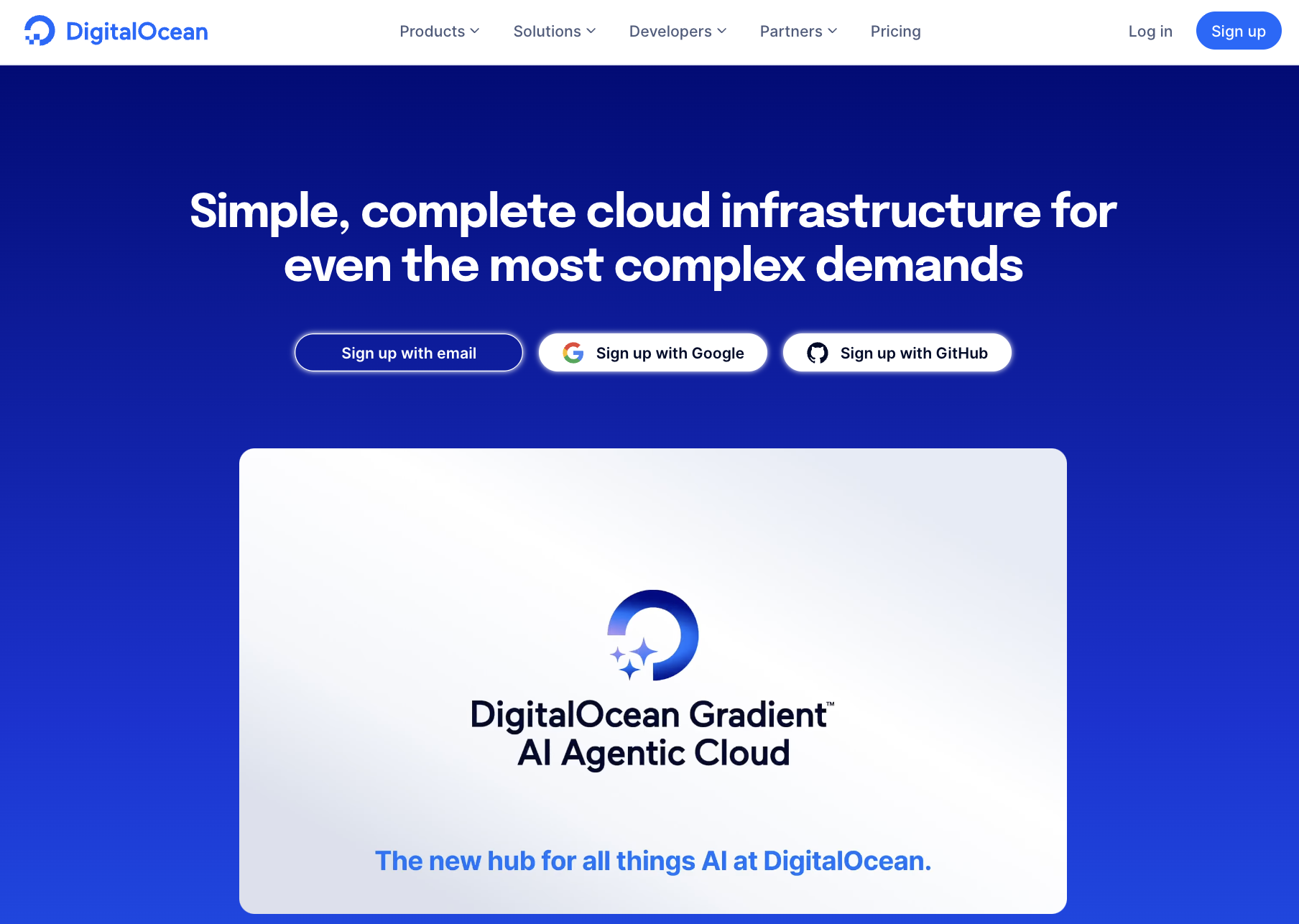
DigitalOcean is a cloud infrastructure provider known for straightforward services, competitive pricing, and strong support—making it a solid alternative to Linode for digital native enterprises, AI-native businesses, and developers. This cloud provider offers a broader product range than Linode, including App Platform for deploying code directly from Git repositories, managed databases for PostgreSQL, MySQL, and Redis, Spaces for S3-compatible object storage, GPU Droplets for AI/ML workloads, and Functions for serverless computing.
With the addition of GPU compute options and DigitalOcean’s agentic cloud offering, Gradient™ AI, it’s a strong choice for teams building and deploying AI/ML workloads without the overhead of hyperscalers. DigitalOcean also offers predictable, flat-rate pricing with no hidden fees and low egress costs, so you know what you’re paying before you scale. One of DigitalOcean’s key advantages over Linode is its tiered support system—ranging from free ticket-based support to Premium plans with 30-minute response times, dedicated Slack channels, architecture reviews, and one-on-one onboarding. For cloud infrastructure, you get hyperscaler-level services without the complexity; for AI/ML, you get GPU compute and model deployment as part of a complete platform—not a GPU-only neocloud.
DigitalOcean key features:
-
Access and manage on-demand NVIDIA GPUs for training, inferencing, and deploying AI/ML models.
-
Deploy pre-configured applications and software stacks like Docker, WordPress, and Mastodon in a single click from a curated marketplace.
-
Run and orchestrate containerized applications with a managed Kubernetes service that includes a free, simplified control plane.
-
Build applications on a platform that is independently audited for key enterprise compliance standards, including SOC 2 Type 2 and ISO 27001.
DigitalOcean pricing:
-
Droplets: $4/month starting for basic VMs with 512 MiB memory, 1 vCPU, 10 GiB SSD, and 500 GiB transfer
-
App Platform: $0 for static sites; $5/month starting for basic web apps with automatic scaling and built-in CI/CD
-
GPU Droplets: $3.39/GPU/hour on-demand for NVIDIA H100 GPU instances, or $1.99/GPU/hour with a 12-month commitment
2. Vultr for developers and businesses needing high-performance, bare metal compute
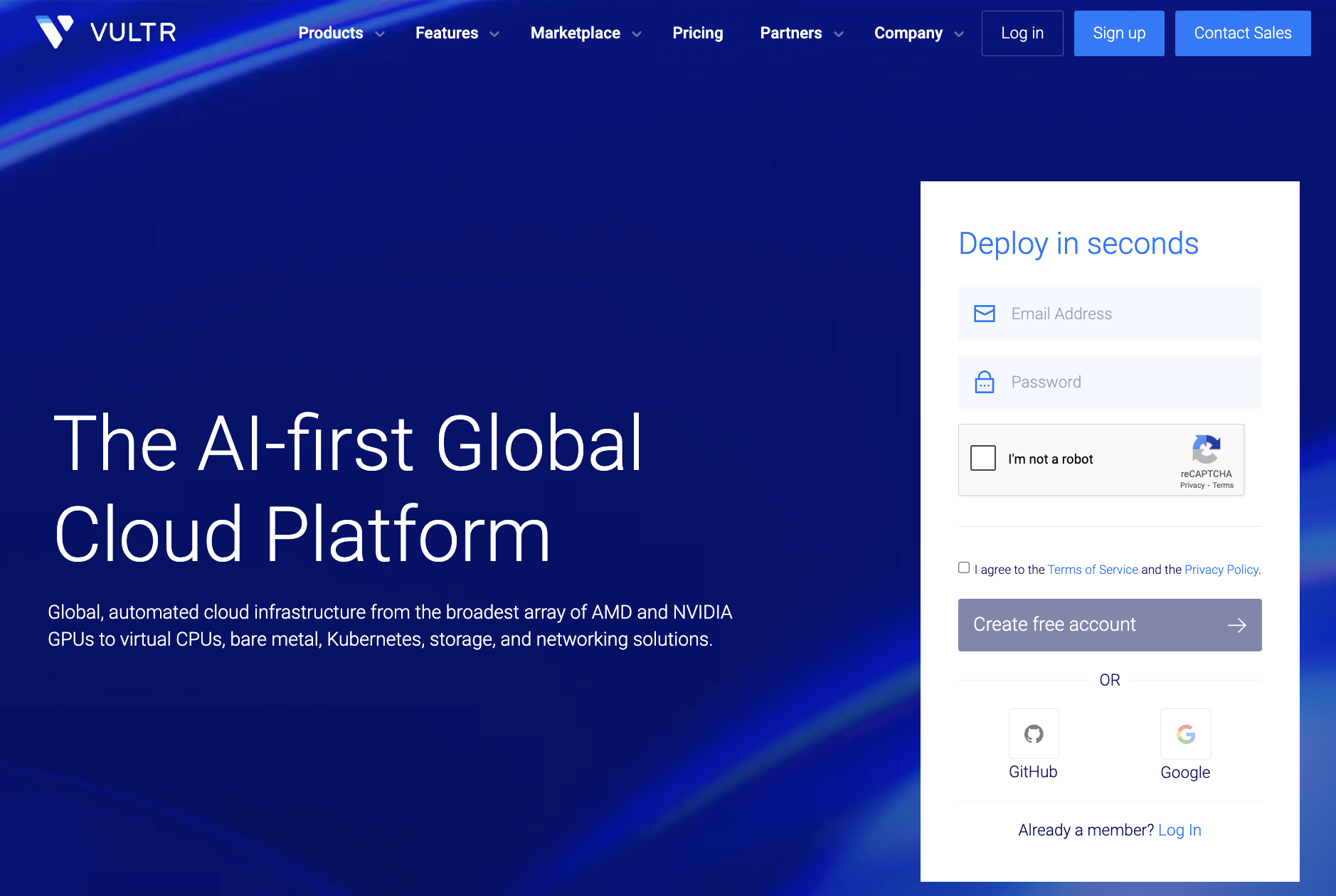
Vultr is a cloud service provider that offers various computing and storage solutions. It provides a range of high-performance infrastructure, including cloud compute, bare metal, and dedicated GPU instances across numerous global data centers. These offerings cater to developers and businesses with demanding cloud and AI workloads, such as machine learning and scientific computing. Vultr focuses on providing direct access to hardware for users who prefer to manage their own infrastructure. In terms of managed database services, Vultr’s offerings are somewhat limited, missing options like MongoDB and Kafka, which are available from competitors like DigitalOcean.
Vultr key features:
-
Access cloud compute instances equipped with NVIDIA GPUs for AI, machine learning, and other demanding tasks.
-
Provision fully dedicated, single-tenant bare metal servers for workloads requiring direct access to physical hardware.
-
Mount and deploy any custom operating system by directly uploading your own ISO file to the platform.
-
Establish a private, dedicated network connection between existing on-premises infrastructure and the Vultr platform.
Vultr pricing:
-
Cloud Compute: $5/month starting for Shared CPU with 1 GB RAM, 1 vCPU, 25 GB SSD
-
GPU instances: $2.99/hour on-demand for NVIDIA H100 GPU instances
Raw infrastructure isn’t enough to build a business. While Linode and Vultr are suitable choices for raw performance and core infrastructure, DigitalOcean offers a more comprehensive ecosystem of managed services that include fully managed databases, Kubernetes, and extensive documentation that growing teams actually need to scale. See which provider offers the best ecosystem for your goals in our comparison of DigitalOcean vs Linode vs Vultr.
3. Scaleway for developers seeking a cost-effective European cloud
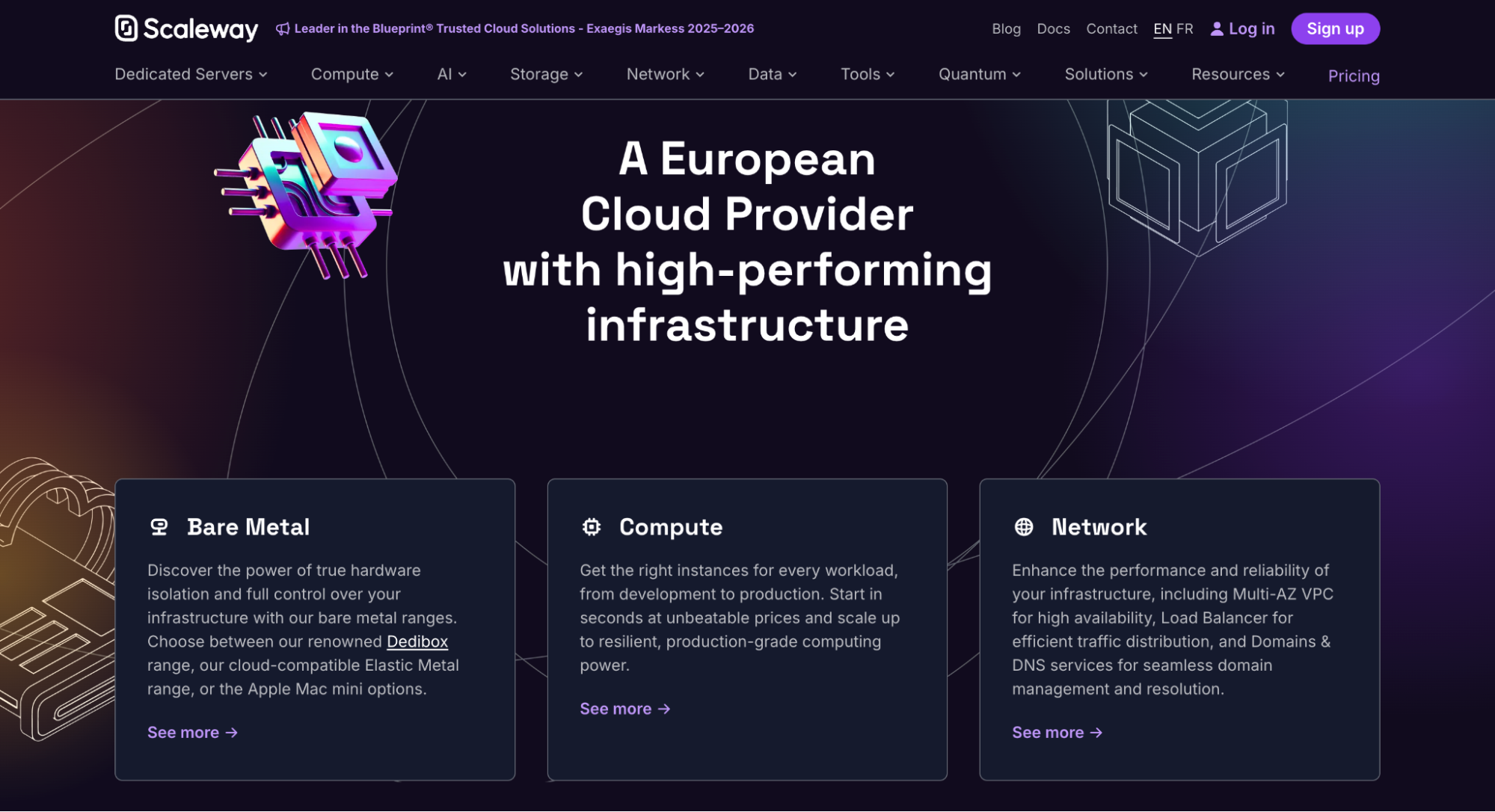
Scaleway is a European cloud provider offering a comprehensive suite of services, including compute, storage, and bare metal products. It has also established a focus on artificial intelligence, providing powerful GPU instances and managed AI tools. Scaleway appeals to businesses that require regional data sovereignty and sustainable infrastructure for both general-purpose cloud computing and intensive AI workloads. Its localization can impact its suitability for businesses aiming to serve a worldwide customer base, as it may not offer the same level of global reach as some of its competitors.
Scaleway key features:
-
Deploy and manage machine learning models with a suite of AI tools, including serverless endpoints and powerful GPU instances.
-
Build resilient applications using multiple Availability Zones that are physically isolated within a single European region.
-
Deploy fully dedicated Elastic Metal servers that combine the performance of bare metal with the on-demand flexibility of the cloud.
-
Run workloads in environmentally efficient data centers that leverage techniques like adiabatic cooling to reduce energy consumption.
Scaleway pricing:
-
Virtual Instances: €0.10/month for STARDUST1-S Development Instance with 1 vCPU, 1 GB RAM, and 100 Mbps bandwidth
-
GPU Instances: €2.52/hour for NVIDIA H100 GPU instances
Scaleway’s infrastructure is optimized for the European market, but its regionally concentrated footprint can pose challenges for global scaling. Because Scaleway lacks data centers in North America and Asia, users in those regions may experience increased latency. Compare DigitalOcean vs Scaleway to see how they stack up in terms of geographic coverage, support, and tooling compatibility.
4. OVHcloud for European enterprises needing dedicated servers
OVHcloud, headquartered in France, specializes in providing dedicated servers and private cloud solutions at budget-friendly rates. The service is primarily oriented towards the European market, aligning its infrastructure and service offerings with regional needs and preferences. It also provides a range of AI solutions, from dedicated servers with powerful GPUs to managed AI tools. While OVHcloud’s portfolio includes a variety of cloud services, its focus is more on meeting the demands of enterprise businesses rather than small and medium-sized businesses (SMBs) or individual developers. This positioning makes OVHcloud a distinct option for larger organizations seeking cost-effective, dedicated infrastructure for both large-scale cloud operations and private AI development within Europe.
OVHcloud key features:
-
Access a suite of AI tools and infrastructure, including GPU-accelerated dedicated servers for large-scale model training.
-
Deploy a dedicated, VMware-based private cloud environment with pre-configured software-defined data center packs.
-
Dedicated servers featuring a proprietary water-cooling system designed to optimize performance and energy efficiency.
-
Connect and isolate resources across different global data centers using a private, software-defined physical network.
OVHcloud pricing:
-
Public Cloud Instances: $8.59/month starting for shared-resource instances with 2 GB RAM, 1 vCore, and 25 GB storage
-
AI Training GPUs: $4.59/hour starting for NVIDIA H100 GPU instances
OVHcloud’s infrastructure-heavy approach is tailored for enterprise bare-metal needs, but it may introduce more configuration complexity for global teams. For those seeking bundled bandwidth pricing and intuitive management interfaces that minimize manual server administration, our guide to OVHcloud alternatives highlights providers built for rapid deployment.
5. Hetzner for affordable compute in Europe & North America
Hetzner operates as a cloud service provider, offering cost-effective computing solutions. While their pricing is competitive, their product range is narrower compared to other top providers, focusing mainly on compute offerings. While Hetzner does provide dedicated server options with GPUs for AI-related tasks, these exist as standalone compute products without a surrounding ecosystem of managed services. Notably, Hetzner does not offer managed databases, Kubernetes, or Platform as a Service options, which may limit its applicability for certain users.
The company’s data centers are located in Europe and North America, providing geographical coverage in these regions, but otherwise lacking a broader global presence. Hetzner is a viable choice for those prioritizing affordability in cloud compute resources, primarily within the specified regions, but may require more hands-on management for complex applications.
Hetzner key features:
-
Obtain dedicated servers with NVIDIA GPU options for raw, high-performance computing tasks.
-
Acquire discounted dedicated servers with older hardware specifications through a unique server auction marketplace.
-
Deploy straightforward cloud instances focused purely on core compute resources without integrated platform services.
-
Attach large, inexpensive network storage volumes accessible via protocols like Samba/CIFS for backups or network file sharing.
Hetzner pricing:
-
Cloud Servers: $4.09/month starting for CX23 cost-optimized shared vCPU instances with 2 vCPUs, 4 GB RAM, 40 GB NVMe SSD, and 20 TB included traffic
-
Dedicated GPU Servers: $205/month plus $88 setup fee starting for NVIDIA RTX 4000 SFF Ada (GEX44)
Hetzner specializes in low-cost raw compute, while DigitalOcean offers the managed services and extensive documentation that help teams ship quickly. Weigh the benefits of a DIY approach against a fully managed platform to see how Hetzner compares to DigitalOcean.
Hyperscalers
Hyperscalers like AWS, Azure, and Google Cloud Platform offer vast global infrastructure, advanced technologies, and a wide array of services, making them a go-to for businesses seeking comprehensive and scalable cloud solutions. However, their size and complexity can sometimes be daunting for smaller businesses, as can their pricing models. Carefully evaluate their offerings against your specific needs—if you’re operating in China, Alibaba Cloud has the regional infrastructure you need, but if you’re a small team without dedicated cloud expertise, AWS’s complexity might not be a good fit.
6. Amazon Web Services (AWS) for enterprises needing diverse, global cloud services
AWS offers a diverse range of integrated cloud services, including computing, storage, and database solutions. It operates a global network of data centers, catering to widespread geographic needs. The platform’s strength is in its breadth, featuring a collection of AI services like Amazon SageMaker for building and training models, and Amazon Bedrock for generative AI applications. However, AWS is also known for its complex pricing structure, which can be opaque and challenging for some users to navigate. Its comprehensive nature can also present a steep learning curve for teams without dedicated expertise. Additionally, while AWS provides a variety of services, it lacks a free support option.
AWS key features:
-
Suite of AI and ML services, including Amazon SageMaker, designed to build, train, and deploy machine learning models at a large scale.
-
Run code based on event triggers without provisioning or managing any underlying server infrastructure.
-
Highly granular identity and access management controls to securely manage permissions for all users and resources.
-
Durable and scalable object storage service via Amazon S3, built to handle use cases ranging from website hosting to big data analytics.
AWS pricing:
-
EC2 instances: $6.13/month for t4g.micro shared instance with 2 vCPUs, 1 GB RAM, EBS-only storage, and up to 5 Gbps network
-
App Runner: $0.007/vCPU-hour and $0.007/GB-hour starting for active container instances, with configurations ranging from 0.25 vCPU/0.5 GB to 4 vCPU/8 GB
-
GPU instances: $6.88/hour on-demand for p5.4xlarge GPU instance with 16 vCPUs, 256 GiB RAM, 100 Gigabit network, and 1x 3840 GB SSD
AWS offers extensive features, but its complex pricing and enterprise focus can sometimes lead to surprise bills for smaller teams. If you need reliable cloud hosting with transparent costs and a simpler interface, read our guide to the best AWS alternatives.
7. Google Cloud Platform (GCP) for businesses focused on AI, data, & multi-cloud
Google Cloud Platform offers a wide array of cloud services, focusing on areas such as AI, machine learning, and multi-cloud interoperability. It provides advanced AI solutions and supports efficient machine learning workloads with its NVIDIA GPU offerings. As Google’s unified AI platform, Vertex AI provides an extensive suite of tools designed to manage the entire machine learning lifecycle, from data preparation and model training to deployment and monitoring, though this all-in-one approach can introduce significant complexity for users. However, GCP’s product suite is often considered complex to navigate, potentially posing a challenge for less tech-savvy users. Additionally, GCP’s pricing, particularly for high-bandwidth usage, can escalate costs quickly for businesses with extensive data transfer needs.
Google Cloud Platform key features:
-
Run complex analytical queries on petabyte-scale datasets using a serverless data warehouse.
-
Deploy and manage applications across GCP, on-premises data centers, and other clouds with a unified, managed platform.
-
Build, deploy, and manage machine learning models with a unified toolchain for the entire ML lifecycle.
-
Execute code in response to events without provisioning servers using a fully managed serverless platform for containerized applications.
Google Cloud Platform pricing:
-
Compute Engine: $6.11/month for e2-micro shared instance with 2 vCPUs and 1 GiB RAM
-
App Engine: $0.05–$0.10/hour per instance, depending on environment (Standard or Flexible) and instance class, with free tier quotas available
-
GPU instances: $88.49/hour on-demand for A3-highgpu-8g instance with 8 GPUs, 208 vCPUs, and 1872 GiB RAM
Google Cloud Platform’s 100+ products and complex pricing models often require a dedicated specialist to manage. If you are paying enterprise rates for features you never touch, it’s time to simplify. Discover how transparent costs and straightforward infrastructure can benefit your business in our comparison of DigitalOcean vs Google Cloud Platform.
8. Microsoft Azure for businesses integrated with the Microsoft ecosystem

Microsoft Azure is a cloud computing platform with an emphasis on Windows-based virtual machines, suitable for businesses integrated with Microsoft’s ecosystem. The platform includes services like AI, machine learning, and analytics, addressing various business requirements. Recent updates have centered on Azure AI Foundry, which now serves as a hub for building and managing AI applications, featuring an array of AI models. Although Azure technically supports Linux operating systems, its range of services for Windows is more extensive. Azure operates a global network of data centers, offering scalable solutions, but those primarily seeking Linux-based options might consider different alternatives.
Microsoft Azure key features:
-
Manage resources across on-premises, multi-cloud, and edge environments from a single, unified control plane.
-
Natively integrate and manage Windows Server workloads with specialized tools for migration, security, and updates.
-
Suite of AI development tools and pre-trained models, including the Azure OpenAI Service.
-
Build and deploy .NET applications and APIs using a fully managed platform without needing to configure the underlying server infrastructure.
Microsoft Azure pricing:
-
Virtual machines: $6.132/month for basic B2ts v2 series (pay-as-you-go pricing)
-
Azure App Service: $0 for F1 Free Plan; $9.49/month per site for D1 Shared Plan
-
Cloud GPUs (H100): $8.820/hour for NC40ads H100 v5 with 40 vCPUs, 320 GB RAM, 3576 GB temporary storage
Azure’s pricing complexity can lead to unpredictable bills, especially when factoring in bandwidth and support costs. If you are trying to understand the variables driving up your monthly spend, check out our breakdown of why Microsoft Azure is expensive.
9. IBM Cloud for enterprises in regulated industries needing hybrid cloud
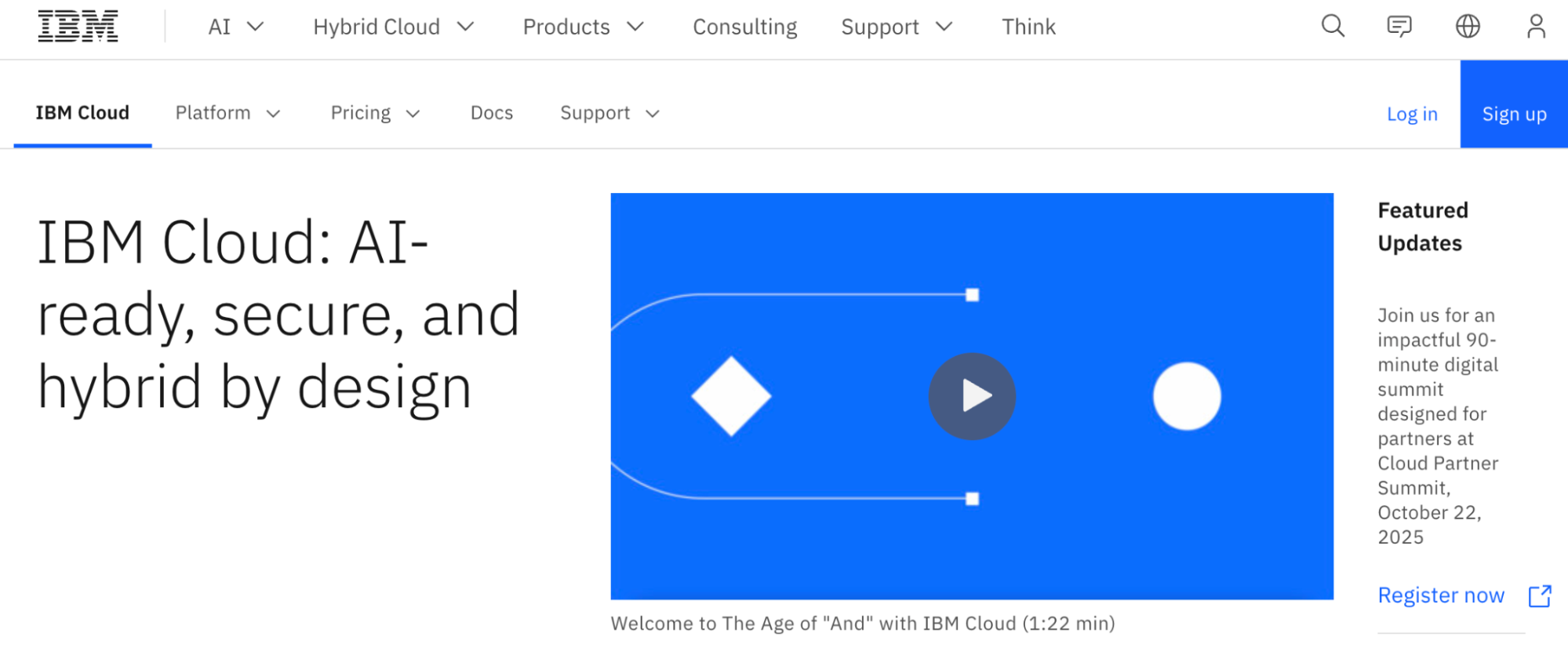
IBM Cloud offers a suite of cloud computing services, including IaaS, PaaS, and SaaS solutions, primarily catering to enterprise-level requirements. The platform integrates with IBM’s extensive range of hardware and software products. IBM’s AI strategy is centered around its watsonx platform, which provides tools for building, scaling, and governing AI models. While it provides advanced capabilities like AI and machine learning through Watson, blockchain, IoT, and data analytics, its complexity may present challenges for smaller businesses. Additionally, IBM Cloud offers limited free support options, and its blend of public, private, and hybrid cloud deployments suits various business and compliance needs, but may not be ideal for organizations seeking simpler or more cost-effective solutions.
IBM Cloud key features:
-
Deploy and manage workloads across a mix of public, private, and on-premises environments through a unified hybrid cloud platform.
-
Access a suite of enterprise-grade AI and machine learning services built on the watsonx platform for advanced data analysis.
-
Provision dedicated bare metal servers for high-performance, single-tenant computing workloads requiring maximum control.
-
Deliver applications on a platform specifically designed to meet the strict security and compliance controls of regulated industries.
IBM Cloud pricing:
-
Virtual Servers for VPC: $53.29/month for nxf-2x1 Flex instance with 2 vCPUs, 1 GB RAM, and 2 Gbps bandwidth
-
GPU instances: $85.00/hour for GPU virtual server instance with 8x H100 GPUs, 160 vCPUs, 1792 GiB RAM, 61440 GB storage, and 200 Gbps network
10. Alibaba Cloud for businesses targeting the Asia Pacific market
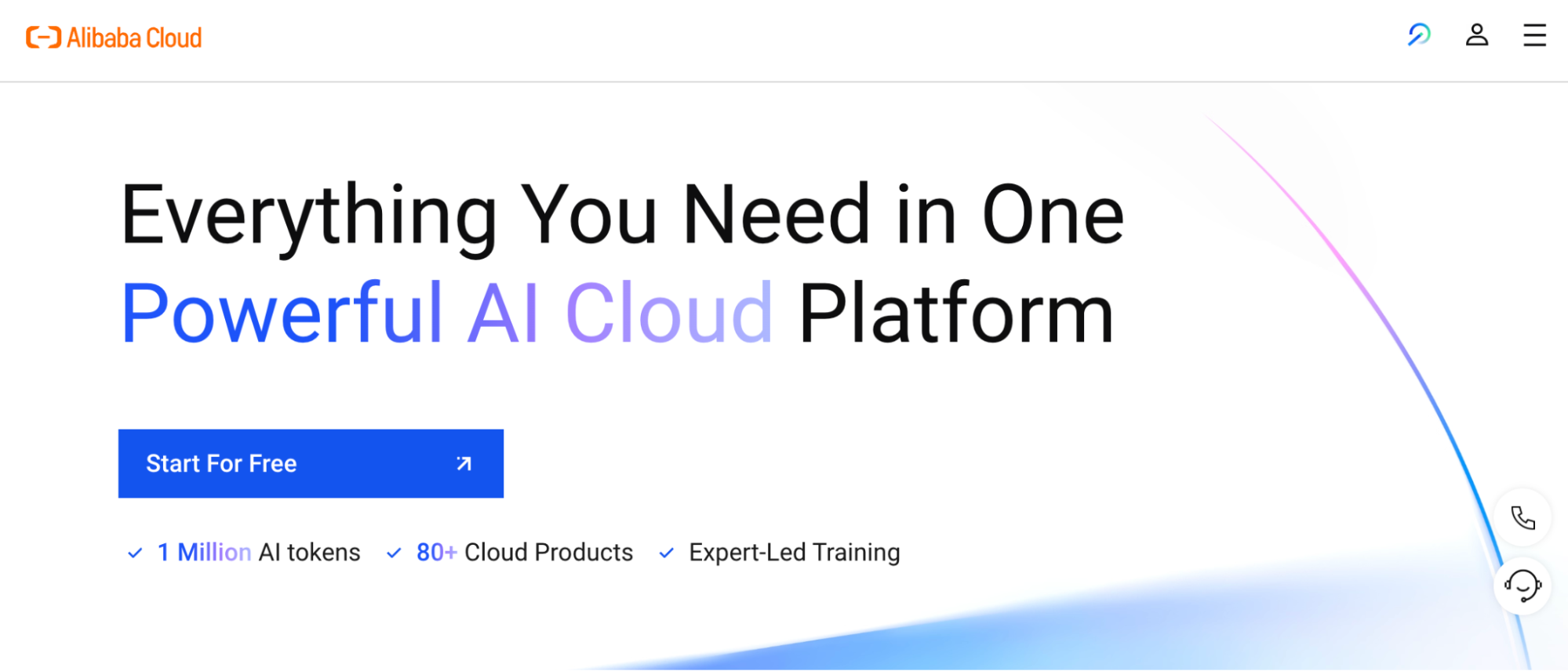
Alibaba Cloud specializes in providing cloud solutions, with a significant presence in the Asia Pacific region, particularly in China and surrounding Asian countries. The platform offers a range of cloud services, including computing, database management, and AI capabilities, tailored to meet the needs of its primary market. Its AI development has been focused on its proprietary large language model series, Tongyi Qianwen (also known as Qwen), which has seen rapid advancements and the release of specialized multimodal models. Alibaba Cloud’s comprehensive suite of services makes it a suitable option for customers operating in these regions. While Alibaba Cloud has expressed its plans to expand globally, its core strengths and infrastructure remain most effective for businesses based in or targeting the Asian market.
Alibaba Cloud key features:
-
Facilitate market entry into China with specialized services and support for navigating local regulatory requirements, like ICP licensing.
-
Leverage a suite of integrated solutions built specifically for e-commerce, including live video streaming and AI-powered product recommendations.
-
Process and analyze massive datasets with a serverless big data platform built for enterprise-scale data warehousing and analytics.
-
AI development and deployment platform, PAI-Lingjun, for high-performance tasks such as training and inferencing large-scale AI models.
Alibaba Cloud pricing:
-
ECS instances: $4.55/month starting for economy instance e with 2 cores, 0.5G memory, 40 G Standard ESSD, and 200Mbps bandwidth
-
Serverless App Engine: $0.000006859/CU starting for pay-as-you-go, or $6.85/year starting for resource plans with 1 million CU
-
GPU instances: $2.26/hour for ecs.gn8is.2xlarge GPU-accelerated compute-optimized instance with 8 vCPUs and 64 GiB RAM
Note: Pricing and feature information in this article are based on publicly available documentation as of December 2025 and may vary by region and workload. For the most current pricing and availability, please refer to each provider’s official documentation.
Linode alternatives FAQ
What are the best Linode alternatives for cloud hosting in 2026?
Depending on your business needs and requirements, top alternatives include DigitalOcean, Vultr, Hetzner, Amazon Web Services (AWS), Google Cloud Platform (GPC), and Microsoft Azure. These providers offer various advantages in pricing, performance, global presence, and managed services compared to Linode.
How does DigitalOcean compare to Linode as an alternative?
DigitalOcean offers several managed services, including databases for MongoDB and Kafka, that Linode doesn’t provide. DigitalOcean also provides several scalability options, transparent pricing, and superior developer documentation and community support.
Which Linode alternative offers the best value for small businesses?
DigitalOcean and Vultr both offer competitive pricing for small businesses, with DigitalOcean providing several integrated managed services and Vultr offering lower baseline pricing. Hetzner provides
excellent value in Europe with high-performance servers at lower costs than most competitors.
What factors should you consider when migrating from Linode?
Consider data center locations, managed service availability, pricing structure, migration tools, and support quality. Also, evaluate whether you need managed databases, Kubernetes services, or specific compliance requirements that your new provider must support.
DigitalOcean: The Linode alternative your business needs
For those seeking a solid alternative to Linode, DigitalOcean is your best bet. With preconfigured cloud servers that can be launched in minutes, DigitalOcean makes it easy for developers at digital native enterprises and AI-native businesses to deploy infrastructure fast. Our control panel and APIs simplify managing Droplets, Load Balancers, and other services.
DigitalOcean is a competitive alternative to Linode in several key areas:
-
World-class customer support: DigitalOcean provides 24/7 technical support as well as escalated support plans, providing customers with dedicated support representatives.
-
Developer experience: Our documentation and tutorials are extensive and unparalleled in the cloud hosting space.
-
Integrated services: DigitalOcean offers a comprehensive agentic cloud platform that includes access to Managed Databases, serverless computing through DigitalOcean Functions, and App Platform.
-
Global infrastructure: With 13 data centers across nine regions, DigitalOcean provides lower latency worldwide.
With top-notch support, an intuitive interface, extensive features, and global infrastructure, DigitalOcean stands out as a formidable Linode alternative.
Read about how Picap, a ride-sharing company, went from spending $120,000 down to $30,000 per month after migrating to DigitalOcean.
Sign up for a DigitalOcean account today to get the peace of mind, customer support, and product suite your business needs.
Any references to third-party companies, trademarks, or logos in this document are for informational purposes only and do not imply any affiliation with, sponsorship by, or endorsement of those third parties.
*This “best for” information reflects an opinion based solely on publicly available third-party commentary and user experiences shared in public forums. It does not constitute verified facts, comprehensive data, or a definitive assessment of the service.
About the author

Fadeke Adegbuyi is a Manager of Content Marketing at DigitalOcean. With 8 years in the technology industry, she leads content strategy and development, creating resources for developers and technical decision makers. She writes about AI/ML and cloud computing—covering everything from prompt engineering best practices to the best cloud monitoring tools.
Get started for free
Sign up and get $200 in credit for your first 60 days with DigitalOcean.*

*This promotional offer applies to new accounts only.